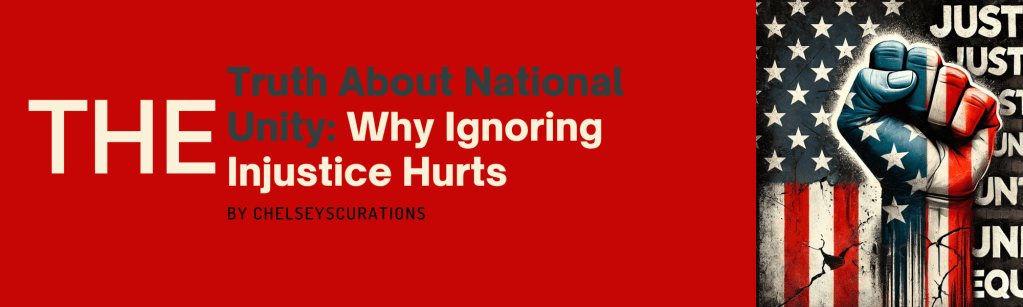
America often speaks of unity—of coming together as one nation. Yet, history tells a different story. For example, during the Reconstruction era following the Civil War, African Americans were temporarily granted voting rights and political representation, only to face systemic disenfranchisement through Jim Crow laws.
Even today, disparities in wealth, education, and justice persist, challenging the notion of a truly united nation. But if unity is the goal, can we achieve it by ignoring past and present injustices? The reality is that unity without justice is just forced compliance, and pretending problems don’t exist only deepens the divides we hope to bridge. Here’s why failing to address systemic injustices is not only ineffective but actually harmful to the dream of true national unity.

1. Ignoring Injustice Creates Resentment and Distrust
When those in power deny or minimize historical and ongoing injustices, they send a dangerous message: these injustices don’t matter. This breeds resentment and distrust among marginalized communities. Hence. Distraction.
Think about Native American communities today—many still face land disputes and broken promises from the U.S. government. Instead of addressing these legitimate grievances, ignoring them only reinforces feelings of alienation and exclusion. Real unity requires trust, and trust cannot exist without acknowledging the truth.
2. Injustice Perpetuates Inequities Across Generations
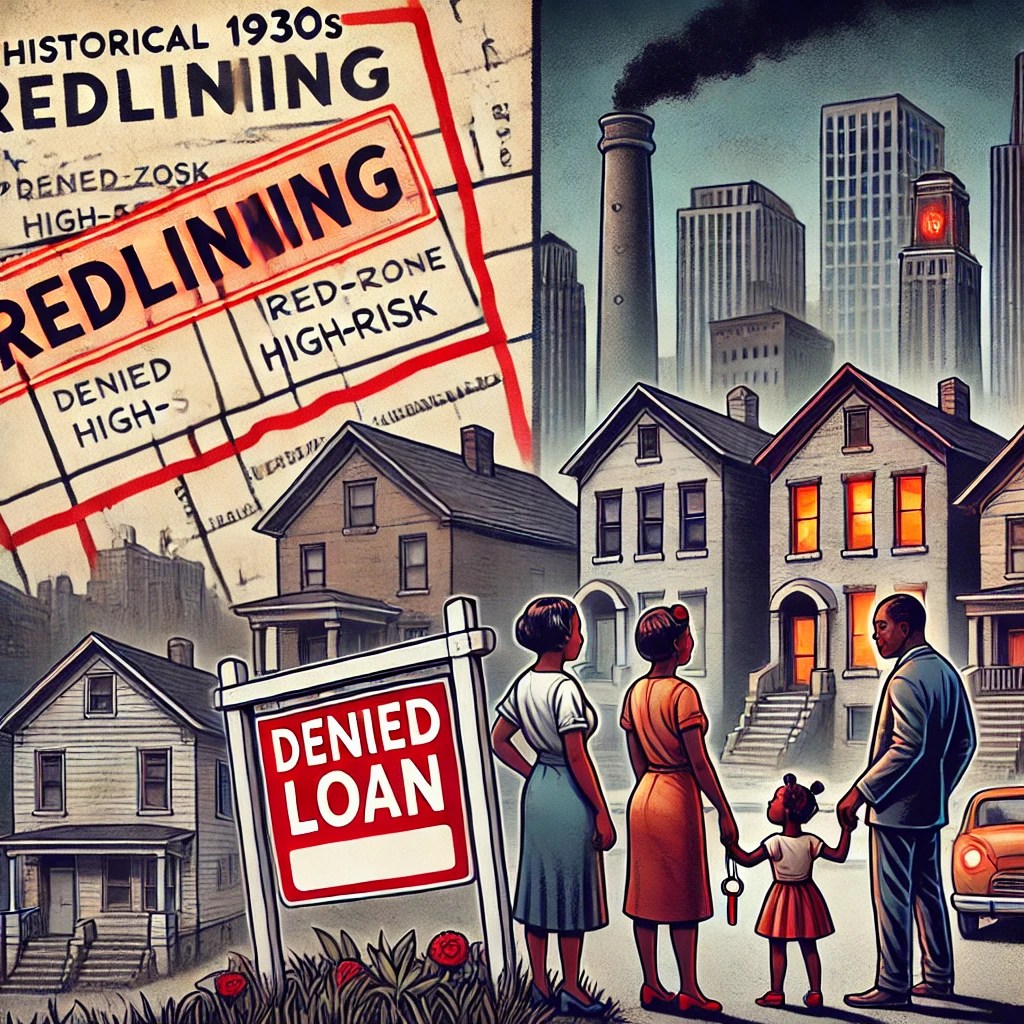
Time alone doesn’t heal systemic inequalities. When injustices go unaddressed, the same patterns of economic, educational, and political disadvantages continue from generation to generation.
Consider the racial wealth gap in America. According to a 2021 Federal Reserve report, the median wealth of white families is nearly eight times that of Black families and five times that of Hispanic families. This disparity stems from decades of redlining, job discrimination, and unequal access to education—factors that continue to limit economic mobility for marginalized communities. It’s not just the result of personal choices—it stems from decades of redlining, job discrimination, and unequal access to education. Without intervention, these inequities persist, making it impossible to achieve true national unity because some Americans continue to start at a disadvantage through no fault of their own.
3. Silence Is Not Unity—It’s Suppression
Some argue that discussing racial and social injustices is “divisive.” They believe that focusing on these issues reopens old wounds and fosters division rather than healing. However, history has shown that ignoring systemic problems does not make them disappear—it only deepens the divides. Open discussions about injustice are not about assigning blame but about creating pathways toward understanding, reconciliation, and meaningful change. But what’s truly divisive? The conversation about injustice—or the injustice itself?
Imagine a workplace where someone is mistreated, yet instead of addressing the issue, leadership tells them to “just be quiet and get along.” Does that create unity? No—it enforces oppression. The same logic applies on a national scale. Suppressing conversations about injustice doesn’t make problems disappear; it just silences those affected by them.
How Addressing Injustice Can Create Real Unity
If America truly wants unity, it must take active steps to ensure justice for all. That means:
✔️ Acknowledging past wrongs and their lasting effects.
✔️ Implementing corrective actions (such as fair policies, reparations, and investments in marginalized communities).
✔️ Ensuring equal opportunities moving forward so that all Americans—not just some—can thrive.
Real unity isn’t about pretending we’re already equal—it’s about making sure we actually are. Take a moment to reflect: What role can you play in fostering justice and equity in your community? Whether through education, advocacy, or meaningful conversations, every action counts in shaping a more inclusive future.
Final Thought: Redefining American Values for True Inclusion
The belief that ignoring injustice helps unity is fundamentally flawed. If “traditional American values” only worked for certain groups in the past, they must be redefined to truly include everyone today.
What do you think? Should America redefine its values to ensure justice for all, or will the system resist change no matter what?
Let’s continue this conversation—because only through honest dialogue and action can we build a nation where unity is not just a slogan, but a reality.
Love,
Chelsey.




 CHELSEY'S CURATIONS
Leave a comment